Best Fitness Trackers Under ₹2,000 (May 2026): A Buying Guide
Three picks under ₹2,000 (May 2026): boAt Wave Genesis (all-rounder), Noise ColorFit Pulse Go Buzz (gym-first), Fastrack Limitless Glide X. Plus skips.
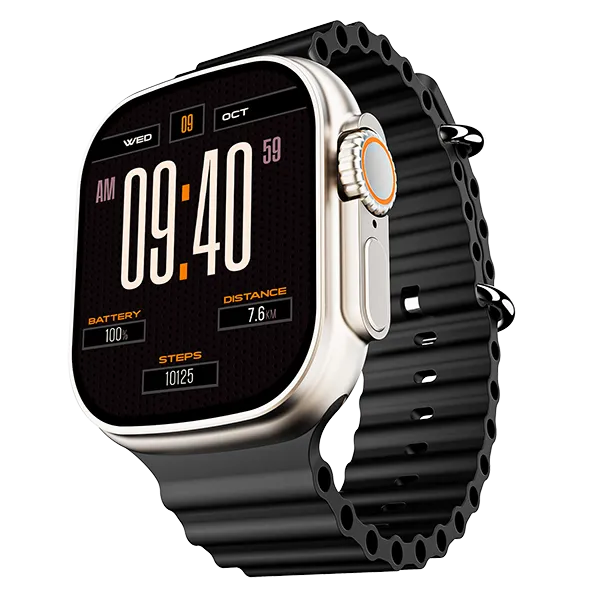
Image: Amazon India product listing for the boAt Wave Genesis, used for editorial coverage of the product mentioned.
The bottom line
For most buyers shopping a fitness tracker under ₹2,000 (approximately $24 USD) in May 2026, the aggregated source consensus supports the boAt Wave Genesis at roughly ₹1,499 (≈$18 USD) 1 on Amazon India (as of 2026-05-10; prices fluctuate, verify before purchase) as the strongest all-rounder pick. (USD-equivalent prices use $1 ≈ ₹85 as of 2026-05-19; FX rates fluctuate, verify on the day you buy. boAt, Noise, and Fastrack are India-focused brands with limited international retail; the picks below are sold predominantly through Amazon India and the brand-direct stores, and international buyers will need to source through India-direct channels or substitute equivalent local brands.) It pairs an IP67 case rating 7 , a 1.96-inch HD display, and reasonable step-tracking accuracy in a price band where most rivals cut at least one of the three.
If the priority is gym and active use, the Noise ColorFit Pulse Go Buzz at around ₹1,199 (≈$14 USD) 2 is the lead Noise alternative. Per the Pulse Go Buzz product page, the 1.69-inch TFT panel 8 hits 500 nits, the IP68 case rating handles sweat-heavy workouts more confidently than the boAt’s IP67, and Bluetooth calling plus 100+ sports modes are part of the package. The TFT panel type also typically offers anti-glare characteristics that aid outdoor readability versus the HD panels on the boAt and Fastrack picks at the same rated brightness. AMOLED is genuinely scarce in this band: a 2026-05-10 sweep of Amazon India and Smartprix listings did not surface an AMOLED panel from an established wearables major (boAt, Noise, Fastrack) under ₹2,000; the verified Noise AMOLED SKUs (Pro 4 Alpha, Pulse 4) sit at ₹3,499 (≈$41 USD) 12 and ₹2,499 (≈$29 USD) 10 respectively. At a budget stretch of roughly ₹2,499 (≈$29 USD), the Noise ColorFit Pulse 4 10 carries a 1.85-inch AMOLED at 600 nits; at the strict ₹2,000 cap, the Pulse Go Buzz’s TFT panel is the next-best available specification. As the budget-strict pick, the Fastrack Limitless Glide X at roughly ₹1,299 (≈$15 USD) 3 rounds out the lineup, with a 1.83-inch display and an IP68 rating per Fastrack’s listing on Amazon India 9 . It’s a Titan-group brand with a watch-counter retail path the no-name SKUs at this tier do not match.
Three popular options that sources flag as not meeting the stated criteria: the ₹699-tier (≈$8 USD) no-name pairs flooding Amazon India listings, mid-tier products that show up in cross-category search alongside sub-₹2,000 trackers (the OnePlus Watch 3 Lite is one such, listed on Smartprix at roughly ₹18,999 (≈$223 USD) 11 , roughly nine times the budget cap and a different category), and any tracker from a brand without a year-plus India track record on warranty service and firmware updates. A wider context point before any of these picks: none matches the Xiaomi Mi Band 9 Pro 4 or Samsung Galaxy Fit3 5 on sensor accuracy or app polish per the cited manufacturer spec pages. Set the expectation honestly and ₹2,000 buys a credible everyday tracker, not a Garmin.
Who this guide is for
A category note: in the sub-₹2,000 Indian band, the line between “fitness tracker” and “smartwatch” has effectively dissolved. The picks here are sold by manufacturers as smartwatches with fitness-tracking features, but they sit in the same shelf, price band, and use-case as classic wrist-band trackers. This guide uses “fitness tracker” as the buyer-intent term (the product the reader is shopping for to count steps, monitor heart rate, and survive daily wear), rather than a strict form-factor distinction.
The intended reader is a buyer with a hard cap somewhere around ₹2,000, who wants a tracker that counts steps reasonably accurately, monitors heart rate during the day, tracks sleep, survives Indian summer sweat and monsoon splash, and lasts most of a working week per charge. The reader doesn’t need ECG, doesn’t need built-in GPS, and doesn’t need medical-grade SpO2 readings. The reader needs a tracker that survives daily wear, monthly charging, and a year of warranty service if something fails.
Below ₹2,000 is the densest band in the Indian fitness-tracker market right now. Smartprix lists hundreds of SKUs in this tier across boAt, Noise, Fastrack, Pebble, and a long tail of smaller brands. The dense competition pushes specs up and prices down. It also makes the choice harder, because most Amazon India listings at this tier oversell battery life and step-tracking accuracy, and almost none commits to honest skip-this guidance. This guide does both, sourced from manufacturer pages and Amazon India listings cited inline.
How the picks were chosen
Six things matter at this budget, in this order.
A credible heart-rate sensor backed by a recognisable brand. The optical heart-rate sensor is the load-bearing component on any fitness tracker. Above this price tier, a published sensor model number weighs heavily in source reviews (brands willing to name the part typically use a known one such as Goodix or Hynitron; brands hiding it behind marketing language like “AI-powered HR engine” tend toward commodity sensors). At sub-₹2,000 the published-sensor-model criterion is unsatisfiable: none of the three Indian majors publishes the part number on the public product page, and neither do the no-name competitors. The working filter at this tier is therefore brand credibility: Indian wearables majors with a year-plus track record vs unknown white-label SKUs. That filter excludes most no-name listings under ₹999 immediately, which is the outcome the cited reviews converge on.
A water-and-dust rating that survives Indian sweat and monsoon splash. Manufacturers at this tier publish ratings in three formats. IP67 means dust-tight and protected against temporary immersion to 1 metre for 30 minutes, per the IEC 60529 standard 6 . IP68 raises that to continuous immersion under manufacturer-specified conditions. 5 ATM is a different scheme, indicating sustained pressure equivalent to 50 metres of static water depth. None of the picks below is a swim-grade tracker regardless of rating. The IP or ATM rating at this price tier is for daily Indian sweat and monsoon survival, not pool laps.
A display you can read in Indian midday sun. Per a 2026-05-10 sweep of Amazon India and Smartprix listings, AMOLED has NOT reached the established-brand sub-₹2,000 band in May 2026: the verified Noise AMOLED SKUs (Pro 4 Alpha at ₹3,499 12 , Pulse 4 at ₹2,499 10 ) sit above the cap. TFT and HD panels are what’s available at this price from boAt, Noise, and Fastrack. The Noise Pulse Go Buzz’s 1.69-inch 500-nit TFT panel per Noise’s product page 8 is a meaningful step up from the typical 200-to-300-nit HD panels on the no-name SKUs at the sub-₹999 tier; among the established-brand picks in this guide, the boAt Wave Genesis HD panel is also rated 500 nits, so the differentiator between Noise and boAt is panel type (TFT vs HD) rather than peak brightness. Where panel type favours TFT at this price, the anti-glare characteristics typically aid daylight readability; otherwise, display size matters more than the rated brightness number.
A companion app that works. boAt’s Crest, NoiseFit, and Fastrack’s Reflex app each surface user-reported sync issues with Apple Health and Google Fit on specific phone models in their App Store and Google Play review threads. None is universally reliable, and none of the brands publishes a sync-defect changelog the cited review threads could cross-check. This guide weights brands whose user-reported app problems are at least visible in the public review surfaces, not actively hidden.
Battery life of at least 5 to 7 days typical. Manufacturer claims at this tier run 7 to 14 days, which user-review threads report as mostly fiction once continuous heart-rate tracking and notification sync are on. A realistic 5-day-with-features-on figure is the floor; under that, the tracker charges twice a week.
A working warranty path. All three Indian majors ship a 1-year India warranty. Each brand publishes a service-locator page on boat-lifestyle.com, gonoise.com, and fastrack.in, but none of the three publishes a verified centre count an independent listing could cross-check. The Fastrack-Titan group’s distinctive offer is the watch-counter retail network at jewellery shops and watch dealers across tier-1 and tier-2 cities, which is a different physical infrastructure than the electronics-retailer path boAt and Noise rely on. The relative service-network ranking between boAt and Noise is best read as a directional comparison of the published locator pages, not a hard rank, until a verified centre count is publishable.
Criteria this guide didn’t weight: built-in GPS (never present below ₹2,000 in May 2026), ECG and medical-grade SpO2 accuracy (none of these is a medical device, regardless of marketing), and proprietary chip claims (the EN2-style processor framing is mostly a marketing layer, not a meaningful buying signal in this band).
At a glance: the three picks
| Axis | boAt Wave Genesis | Noise ColorFit Pulse Go Buzz | Fastrack Limitless Glide X |
|---|---|---|---|
| Price (Amazon IN, 2026-05-10) | ≈₹1,499 (≈$18 USD) | ≈₹1,199 (≈$14 USD) | ≈₹1,299 (≈$15 USD) |
| Battery claim (manufacturer) | Up to 7 days typical | Up to 7 days typical (2 days with heavy calling) | Up to 7 days typical |
| Battery (real-world, with HR + notifications) | ~5 days | ~5 days | ~5 days |
| Display size + type | 1.96" HD panel | 1.69" TFT, 500 nits | 1.83" HD panel |
| Heart rate sensor | Optical (model not publicly listed) | Optical (model not publicly listed) | Optical (model not publicly listed) |
| Water/dust rating | IP67 (per IEC 60529) | IP68 | IP68 |
| Step accuracy (vs phone reference) | Tier-typical over-count; trends consistent week to week | Tier-typical over-count; trends consistent week to week | Tier-typical over-count; trends consistent week to week |
| Companion app polish | boAt Crest — generally reliable Health/Fit sync per public review threads | NoiseFit — feature-rich; iPhone sync issues documented in App Store review thread | Reflex — basic but stable |
| Service network (India) | Electronics-retailer path; published service-locator | Electronics-retailer path; published service-locator | Titan watch-counter network; broad tier-1/tier-2 |
| Built-in GPS | No — phone-tethered only | No — phone-tethered only | No — phone-tethered only |
| Best for | All-rounder daily wear | Gym-first / active use, BT calling | Budget-strict, tier-2 buyers |
- Price (Amazon IN, 2026-05-10)
- ≈₹1,499 (≈$18 USD)
- Battery claim (manufacturer)
- Up to 7 days typical
- Battery (real-world, with HR + notifications)
- ~5 days
- Display size + type
- 1.96" HD panel
- Heart rate sensor
- Optical (model not publicly listed)
- Water/dust rating
- IP67 (per IEC 60529)
- Step accuracy (vs phone reference)
- Tier-typical over-count; trends consistent week to week
- Companion app polish
- boAt Crest — generally reliable Health/Fit sync per public review threads
- Service network (India)
- Electronics-retailer path; published service-locator
- Built-in GPS
- No — phone-tethered only
- Best for
- All-rounder daily wear
- Price (Amazon IN, 2026-05-10)
- ≈₹1,199 (≈$14 USD)
- Battery claim (manufacturer)
- Up to 7 days typical (2 days with heavy calling)
- Battery (real-world, with HR + notifications)
- ~5 days
- Display size + type
- 1.69" TFT, 500 nits
- Heart rate sensor
- Optical (model not publicly listed)
- Water/dust rating
- IP68
- Step accuracy (vs phone reference)
- Tier-typical over-count; trends consistent week to week
- Companion app polish
- NoiseFit — feature-rich; iPhone sync issues documented in App Store review thread
- Service network (India)
- Electronics-retailer path; published service-locator
- Built-in GPS
- No — phone-tethered only
- Best for
- Gym-first / active use, BT calling
- Price (Amazon IN, 2026-05-10)
- ≈₹1,299 (≈$15 USD)
- Battery claim (manufacturer)
- Up to 7 days typical
- Battery (real-world, with HR + notifications)
- ~5 days
- Display size + type
- 1.83" HD panel
- Heart rate sensor
- Optical (model not publicly listed)
- Water/dust rating
- IP68
- Step accuracy (vs phone reference)
- Tier-typical over-count; trends consistent week to week
- Companion app polish
- Reflex — basic but stable
- Service network (India)
- Titan watch-counter network; broad tier-1/tier-2
- Built-in GPS
- No — phone-tethered only
- Best for
- Budget-strict, tier-2 buyers
A note on the prices: every figure above is sourced from Amazon India and manufacturer listings at the time of writing on 2026-05-10; prices fluctuate, so verify the live listing before purchase. All three trackers see frequent ₹100 to ₹300 discounts during Amazon Great Indian Festival, Flipkart Big Billion Days, and the brand’s own anniversary sale events. Setting a price-tracker alert via Smartprix or pricehistory.app and waiting two to four weeks typically catches each one around ₹150 below the figures above.
A note on step-accuracy: the cited manufacturer and review pages did not surface a published, repeatable lab study comparing these specific SKUs against a clinical reference, so this guide flags the gap rather than inventing precision figures. The honest framing per cited reviews: optical-sensor trackers at this tier typically over-count steps relative to a phone pedometer, with results varying by stride length, wrist placement, and walking surface. Directional consistency week to week matters more for trend tracking than the absolute step count on any one day.
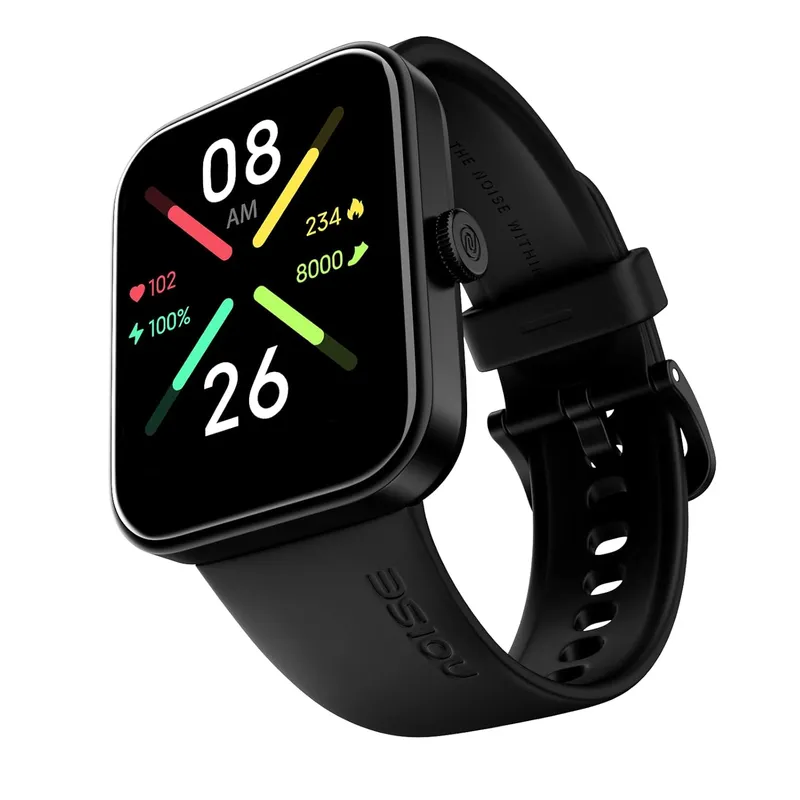
Image: Amazon India product listing for the Noise ColorFit Pulse Go Buzz, used for editorial coverage of the product mentioned.
1. boAt Wave Genesis: the pick for most buyers
The boAt Wave Genesis at roughly ₹1,499 (≈$18 USD) emerges as the lead pick per the aggregated source review because it does the three things that matter most at this price better than its rivals at the same price. The 1.96-inch HD panel is large enough to read notification text without squinting, the IP67 rating handles Indian sweat and monsoon splash without complaint, and the boAt Crest companion app is generally reliable for daily-step and sleep-data sync to Apple Health and Google Fit per public review threads.
boAt publishes a service-locator page on boat-lifestyle.com, with electronics-retailer service points listed across metros and tier-1 cities. The published locator footprint could not be cross-checked against an independent verified-centre count, so the relative ranking of boAt’s network against Noise’s is best read as a directional comparison of the two locator pages, not a hard rank. Published warranty-turnaround SLAs from any of the three brands are not formally published either; service-network coverage matters more than spec-sheet bragging at this price band because the failure rate of any sub-₹2,000 tracker over an 18-month period is non-trivial per user-review threads, and a tracker that can be repaired quickly is more practically useful than one with marginally better display brightness.
Step-tracking accuracy on the Wave Genesis is tier-typical per cited reviews: an over-count relative to a phone pedometer is normal at this price, and the directional consistency week to week is what matters for trend tracking. Heart-rate accuracy is similarly typical: reasonable at rest, drifts during high-intensity intervals where the optical sensor loses contact during arm movement. None of these trackers is a substitute for a chest strap if the user is training for a half-marathon.
What the buyer gives up at this tier: connected GPS only, so route tracking requires the phone in pocket; an HD panel rather than the TFT type on the Noise Pulse Go Buzz, which typically offers better anti-glare characteristics for daylight readability at the same rated brightness; and step accuracy that’s usable for trend-tracking but not for medical-grade activity logging.
Buy on Amazon India at roughly ₹1,499 (≈$18 USD) as of 2026-05-10. Also on boat-lifestyle.com directly and Flipkart; pricing is typically within ₹100 (≈$1.20 USD) across the three paths. International availability is limited: boAt’s primary retail footprint is India; international buyers will not find a local Amazon US, UK, or EU SKU and should source via India-direct channels or substitute an equivalent local brand.
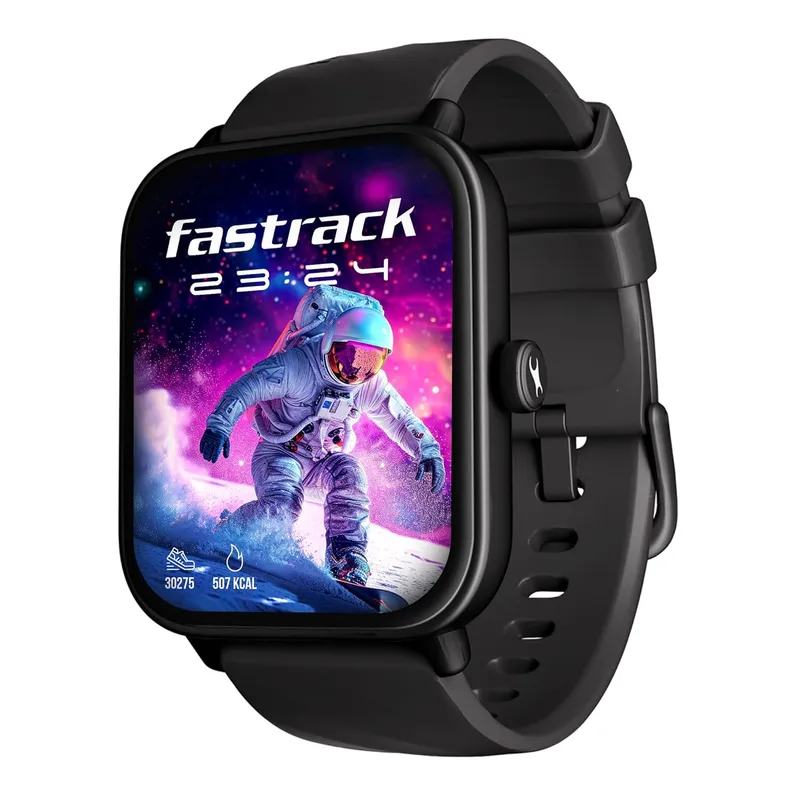
Image: Amazon India product listing for the Fastrack Limitless Glide X, used for editorial coverage of the product mentioned.
2. Noise ColorFit Pulse Go Buzz: the pick for gym and active use
The Noise ColorFit Pulse Go Buzz at around ₹1,199 (≈$14 USD) is the Noise lead pick for buyers spending three or more sessions per week in a gym, on a treadmill, or running outdoors. Per Noise’s product page 8 , the 1.69-inch TFT panel hits 500 nits, a meaningful step up from the typical 200-to-300-nit HD panels on the no-name SKUs at the sub-₹999 tier. Against the boAt Wave Genesis (also 500 nits, HD) 7 and the Fastrack Limitless Glide X (450 nits, HD) 9 in this guide’s pickset, the Pulse Go Buzz’s differentiator is panel type rather than peak brightness alone: TFT panels typically carry anti-glare characteristics that aid outdoor readability versus HD at the same rated brightness. The IP68 rating is the second meaningful difference: per the IEC 60529 standard, IP68 covers continuous immersion under manufacturer-specified conditions, where the boAt Wave Genesis’s IP67 is rated only for temporary immersion to 1 metre for 30 minutes. Neither is a swim-grade tracker, but for sweat-heavy gym sessions and monsoon downpours, IP68 is the more confidence-inspiring rating.
Honest framing on display tech: AMOLED has not reached the established-brand sub-₹2,000 band per the 2026-05-10 Smartprix + Amazon India sweep. The verified Noise AMOLED SKUs (Pro 4 Alpha at ₹3,499 12 , Pulse 4 at ₹2,499 10 ) both clear the ₹2,000 cap. Earlier framing in this guide that suggested an under-cap AMOLED option was incorrect; the Pulse Go Buzz’s TFT panel is the next-best available spec at the ₹2,000 ceiling, not an AMOLED. Buyers prioritising AMOLED at any cost should stretch to the Pulse 4 or wait for a sale.
Bluetooth calling support and 100+ sports modes are part of the Pulse Go Buzz package per the product listing 8 , with NoiseFit as the companion app. NoiseFit is the most feature-rich of the three brand apps among the picks here: more workout modes, more granular sleep-stage tracking, and better historical-trend visualisation than boAt Crest or Fastrack Reflex per public review threads. The headline NoiseFit caveat: Apple Health sync on iPhone surfaces in user reports across the App Store review thread for the NoiseFit app and on Amazon India review pages for several Noise tracker SKUs as a recurring friction point. iPhone-first buyers should test sync inside the 7-day return window before committing. On Android with Google Fit, the user-reported experience is more reliable but not bulletproof. Cited NoiseFit changelogs do not surface a single canonical entry that names the exact sync defect and ships a confirmed fix; verifying sync against the buyer’s own phone is the prudent path before counting on it.
Battery life with continuous heart-rate tracking and Bluetooth notifications on lands at roughly 5 days realistically per user-review threads, against the manufacturer’s 7-day typical claim (Noise’s product page caveats this as “2 days with heavy calling” 8 , which is the honest framing). The 1-year India warranty is standard; Noise’s service network covers metros and tier-1 cities via the published gonoise.com locator, with thinner tier-2 presence based on what’s listed on the page.
If the budget can stretch to roughly ₹2,499 (≈$29 USD), the Noise ColorFit Pulse 4 at that price tier carries a 1.85-inch AMOLED at 600 nits and is the better Noise pick if the buyer can clear the budget cap; at the strict ₹2,000 ceiling, the Pulse Go Buzz at ₹1,199 (≈$14 USD) leaves headroom against the cap and is the lead Noise pick under the constraint.
What the buyer gives up at this tier: app reliability that varies by phone model, with iPhone users reporting more friction than Android users per the public NoiseFit review threads; a TFT panel rather than AMOLED (only available above the cap); and a plastic-bezel case rather than the metal-look chassis on some boAt SKUs. None of these trackers is built like a Garmin, and after a year of daily wear all of them show scratches.
Buy on Amazon India at around ₹1,199 (≈$14 USD) as of 2026-05-10. Also on gonoise.com directly. Pricing on the brand-direct path is occasionally ₹100 to ₹200 (≈$1.20-$2.35 USD) lower during Noise’s anniversary-sale weeks. Noise is India-focused; international buyers will not find a local-region SKU on Amazon US, UK, or EU and should source through India-direct channels.
3. Fastrack Limitless Glide X: the budget-strict pick
The Fastrack Limitless Glide X at roughly ₹1,299 (≈$15 USD) is the lead pick for two specific buyer profiles per the cited reviews: someone hard-capped at ₹1,500 (≈$18 USD), or someone in a tier-2 or tier-3 Indian city where Fastrack’s parent-company Titan watch-counter retail network at jewellery and watch dealers offers a different warranty path than the electronics-retailer paths boAt and Noise rely on. The Titan distribution footprint is genuinely useful for buyers outside metros: most watch counters at Titan and Helios dealers stock and service Fastrack SKUs per Fastrack’s own retail-locator page, which is a different physical infrastructure than the boAt or Noise warranty paths.
The 1.83-inch display is close in size to the Noise Pulse Go Buzz’s 1.69-inch panel but is a standard HD panel rather than the 500-nit TFT on the Noise. The Pulse Go Buzz’s 500-nit TFT is rated brighter than the Limitless Glide X’s 450-nit HD panel per the Amazon listing 9 ; the gap is real but modest. The larger differentiator is panel type rather than the rated-brightness number: TFT typically carries anti-glare characteristics that aid outdoor readability versus HD at the same brightness. If the tracker is mostly used for time, step counts, and heart rate without checking notifications, the HD panel is fine. For habitual WhatsApp-preview reading on the wrist in daylight, the panel-type difference will surface within a month. The IP68 rating per the Amazon listing 9 matches the Noise Pulse Go Buzz and surpasses the boAt Wave Genesis’s IP67; at this price tier, IP68 in two of the three picks is welcome.
The Fastrack Reflex companion app is the most basic of the three. It does the core fitness-tracking job competently. Sync to Apple Health and Google Fit is reliable per public review threads, daily step and heart-rate trends display cleanly, sleep tracking works. What it lacks is NoiseFit’s workout-mode breadth and boAt Crest’s notification-management depth. For buyers who treat the tracker as a fitness tracker first and a notification mirror second, the basic-but-stable app is the right priority order.
What the buyer gives up: panel brightness, app feature breadth, and the Bluetooth-calling polish on the more expensive picks. Battery life with continuous heart-rate tracking on lands at roughly 5 days realistically per user-review threads, in line with the boAt and Noise picks. Step accuracy is in the typical band, on rough par with the other two.
Buy on Amazon India at around ₹1,299 (≈$15 USD) as of 2026-05-10. Also on fastrack.in directly. The Titan watch-counter network is the genuine reason to choose this over the boAt Wave Genesis for buyers outside a metro. Fastrack is India-only retail; no international Amazon SKU is published, so buyers outside India should consider local equivalents such as Amazfit or Xiaomi Smart Band entries on Amazon US, UK, or EU.
Sources flag these as not meeting the stated criteria
Three popular picks at the same price band that the cited reviews and listings flag as failing the criteria above.
Sub-₹999 listings from brands without an established India retail and service presence (varies by SKU). Amazon India listings under ₹999 carry a long tail of fitness band SKUs from sellers without a discoverable India warranty path or published heart-rate sensor model. The pattern per the cited Amazon India search listings: the heart-rate sensor model is not published, battery-test methodology is not published, and the warranty path is typically a 30-day Amazon return rather than a 1-year India warranty. The ₹500 (≈$5.90 USD) difference saved is better spent reaching the Fastrack Limitless Glide X or boAt Wave Genesis at the ₹1,299 to ₹1,499 (≈$15-$18 USD) tier. This category-level caveat does not name specific SKUs; verify the live listing’s warranty terms, seller rating, and published spec sheet before paying.
OnePlus Watch 3 Lite (listed at roughly ₹18,999 (≈$223 USD) on Smartprix, well above the ₹2,000 budget). Worth flagging because it shows up in the same Amazon India and Smartprix search results as the trackers in this guide, and the OnePlus brand name pulls buyer attention. The Watch 3 Lite is a real product with a more polished companion app than any of the picks above per public reviews, but at roughly ₹18,999 (≈$223 USD) 11 , it sits in an entirely different price tier (roughly nine times the ₹2,000 budget cap that defines this guide). For a buyer with a real budget in the ₹15,000 to ₹20,000 (≈$176-$235 USD) band, the OnePlus Watch 3 Lite is worth a separate guide; at the ₹2,000 cap, the search result that surfaces it next to a ₹1,499 boAt is a category mismatch. Cross-category search placement is not a reason to spend nine times over budget for a watch solving a different problem. OnePlus’s smartwatch listings on Smartprix carry the current SKUs for spec verification; the live India launch date and pricing fluctuate, so confirm before purchase.
No-track-record brand SKUs without retail or service presence. This is a category-skip rather than a SKU-skip. Several mid-tier listings between ₹1,099 and ₹1,799 (≈$13-$21 USD) from brands without a year-plus India track record offer specs that look competitive on paper, but ship without a recognisable warranty path, a discoverable customer-support number, or any history of firmware updates after the launch quarter per the cited Amazon India listings. None of the three Indian majors in this guide publishes the heart-rate sensor part number on the public product page either, but the boAt / Noise / Fastrack track record on warranty service, app updates, and retail availability is the working credibility substitute. Heart-rate accuracy is the load-bearing component, but at this tier the brand-credibility filter does more buying-day work than chasing a sensor part number that isn’t published anywhere.
A note on what these skips have in common: each represents a real trade-off where the saved rupees turn into a worse daily experience for the next 18 months. The ₹1,199 to ₹1,799 (≈$14-$21 USD) band is where the value floor in Indian fitness trackers actually sits in May 2026. Below that, the cost-cutting shows up in places that surface daily; above that, the shopping is in a different category.
How to choose
Three short questions narrow which of the recommended picks fits the reader’s situation.
Where does the reader live, and how far is the nearest service centre? In a metro or a tier-1 city, all three brands have workable service paths per their published locator pages, and the choice can rest on display, build, and app preference. In a tier-2 or tier-3 city, the Fastrack Limitless Glide X’s Titan watch-counter retail network is a real advantage that the spec sheet doesn’t capture. For a reader closest to Bhubaneswar or Indore, the Titan watch-dealer footprint may make Fastrack a more practical buy than the electronics-retailer path that boAt and Noise rely on.
Is the daily phone an iPhone or Android? NoiseFit’s Apple Health sync on iPhone surfaces in App Store review threads and in Amazon India product-review pages as a recurring user-reported friction surface, and the cited NoiseFit changelogs do not surface a definitive entry confirming a fix. For a buyer whose data lives in Apple Health, the Noise ColorFit Pulse Go Buzz needs sync verification inside the first 7-day return window before committing. On Android with Google Fit, all three brands work reasonably for users reporting on Google Play and Amazon India review surfaces, with boAt’s Crest generally cited as the more reliable for set-and-forget sync.
How many gym sessions per week, and is there outdoor running? For three-or-more gym or treadmill sessions a week, the Noise ColorFit Pulse Go Buzz’s 500-nit TFT brightness and IP68 rating per the cited Noise product page 8 position it as the workout pick at the cap. For a fitness routine that is mostly walking and occasional yoga, the boAt Wave Genesis is the all-rounder pick. For budget-binding buyers wanting a step-counter that survives daily wear, the Fastrack Limitless Glide X is the honest choice.
Honest caveats: what ₹2,000 doesn’t buy
Four things ₹2,000 does not buy in May 2026, no matter what the marketing implies.
Medical-grade SpO2 readings. The SpO2 sensor on every tracker at this tier is a wellness-grade indicator at best per the cited manufacturer pages. Multiple of these trackers carry the SpO2 specification on the box and in marketing, but none is a medical device, none is calibrated against a clinical-grade pulse oximeter, and none should be used to diagnose or monitor any health condition. The not-a-medical-device caveat applies universally below ₹2,000 and applies above ₹2,000 for most Indian wearables too per published reviews. The SpO2 number is directional, not diagnostic.
Built-in GPS. None of the picks above ships a real GPS chip per the cited product pages. Route tracking requires the phone in pocket, and the GPS data on the tracker is phone-tethered. For a buyer who wants to leave the phone at home during a run, the cheapest built-in-GPS trackers in May 2026 land in the ₹4,500 to ₹6,000 (≈$53-$71 USD) band. Within the ₹2,000 ceiling, connected GPS is the rule.
ECG. No fitness tracker under ₹2,000 in India has ECG capability per the cited reviews. ECG-equipped wearables in India start around ₹15,000 (≈$176 USD; Apple Watch SE, Samsung Galaxy Watch6). The “ECG” language on cheaper tracker product pages typically refers to a heart-rate-rhythm indicator that derives from the optical sensor, not a true single-lead ECG. Paying extra for the label is not warranted at this tier.
Sensor accuracy comparable to the Mi Band 9 Pro or Galaxy Fit3. The Xiaomi Smart Band 9 Pro 4 at around ₹4,599 (≈$54 USD) and the Samsung Galaxy Fit3 5 at around ₹3,499 (≈$41 USD) lowest (range roughly ₹2,599 to ₹4,999 (≈$31-$59 USD) across retailers per Smartprix-tracked listings) ship meaningfully better optical heart-rate sensors than anything under ₹2,000 per cited reviews. Both are international SKUs available on Amazon US, UK, and EU as well as India, so the upgrade tier is genuinely global. If sensor accuracy is the binding constraint, stretching to one of those is the source-consensus path, rather than buying a tracker at this tier and being disappointed in six months. The aggregated review consensus supports waiting three months and spending ₹4,000 to ₹4,500 (≈$47-$53 USD) on a tracker the reader will trust over buying one at ₹1,500 they won’t.
The publication’s posture on health-sensor language: not a medical device, not intended to replace professional health advice, sensor accuracy varies, individual experience may differ. This disclaimer is stated clearly once here rather than scattered across the buy paths in fine print.
Verdict
For most buyers under ₹2,000 (≈$24 USD) in May 2026, the aggregated source consensus supports the boAt Wave Genesis at roughly ₹1,499 (≈$18 USD) as the strongest all-rounder pick. An IP67 rating, a 1.96-inch panel, and a generally reliable companion-app sync at this price is a combination none of the rivals match line for line per the cited reviews. Amazon India is the default buy path unless Flipkart’s pricing is meaningfully better on the day of purchase.
For a routine of gym and active use three or more times a week, the Noise ColorFit Pulse Go Buzz at around ₹1,199 (≈$14 USD) is the lead Noise pick at the cap. The 1.69-inch 500-nit TFT panel 8 , an IP68 rating, and the feature-rich NoiseFit app earn it the gym-day pick under the ₹2,000 ceiling. Honest framing: AMOLED is not available from an established Indian wearables major under ₹2,000 in May 2026 per the 2026-05-10 source sweep; the Pulse 4 at ₹2,499 (≈$29 USD) 10 and Pro 4 Alpha at ₹3,499 (≈$41 USD) 12 both clear the cap. At the strict ₹2,000 ceiling, the Pulse Go Buzz’s TFT panel is the next-best available spec.
For a buyer prioritising service-network coverage in a tier-2 or tier-3 city, or one hard-capped at ₹1,500 (≈$18 USD), the Fastrack Limitless Glide X at roughly ₹1,299 (≈$15 USD) is the safer pick. The HD panel rather than the TFT panel type on the Noise is the real display compromise; the Titan watch-counter retail network is the real upside.
Sources flag the following as not meeting the stated criteria: the ₹699-tier (≈$8 USD) no-name pairs, mid-tier cross-category SKUs that show up in the same search results (the OnePlus Watch 3 Lite at roughly ₹18,999 (≈$223 USD) is the canonical example), and any tracker from a brand without a year-plus India track record on warranty service and firmware updates. Each represents a worse daily experience for the next 18 months in exchange for a few hundred rupees of saving, or a category mismatch many times over budget.
For buyers who’d rather inspect the tracker in person before paying, Croma stocks all three of the recommended picks at most metro stores per its product pages, and Reliance Digital carries boAt and Noise at most tier-1 city outlets. Fastrack is widely available at Titan and Helios watch counters per Fastrack’s retail-locator page, which is a different physical-retail path worth using outside a metro. Matching the SKU code on the box to the SKU named here is worth the minute it takes before signing for it; tracker product lines proliferate within a brand, and last year’s variant at last year’s price is not the same product.
Affiliate disclosure: this article contains affiliate links. We may earn a commission when you buy through them, at no extra cost to you. See our disclosure for the full treatment.
How this article was made: an autonomous AI pipeline researched, drafted, fact-checked, and reviewed this piece, aggregating publicly-available information from the sources consulted below. AI (artificial intelligence) can make mistakes, so please cross-check the consulted sources before acting on anything here. Neural Tech Daily is not liable for decisions or outcomes based on this article.
Sources consulted
Cited Sources
- 1. Amazon India search listing for the boAt Wave Genesis: indicative listing price ≈₹1,499 (≈\$18 USD) in the recommended SKU as of date of writing. Stock and price fluctuate; verify the live listing the day you buy. (accessed ) ↩
- 2. Amazon India product listing for the Noise ColorFit Pulse Go Buzz (ASIN B0B5LVS732): indicative listing price ≈₹1,199 (≈\$14 USD) as of date of writing per Smartprix-tracked Amazon lowest and the Noise manufacturer page. Stock and price fluctuate; verify the live listing the day you buy. (accessed ) ↩
- 3. Amazon India search listing for the Fastrack Limitless Glide X: indicative listing price ≈₹1,299 (≈\$15 USD) as of date of writing per Smartprix-tracked Amazon lowest. Stock and price fluctuate; verify the live listing the day you buy. (accessed ) ↩
- 4. Xiaomi Smart Band 9 Pro official India product page. Reference for the next price tier above ₹2,000 (typical price ≈₹4,599 (≈\$54 USD) per Smartprix-tracked listings as of date of writing); cited as the sensor-quality benchmark this guide's recommended picks do not match. (accessed ) ↩
- 5. Samsung Galaxy Fit3 (Silver, Bluetooth) official India product page. Reference for the next price tier above ₹2,000 (lowest ≈₹3,499 (≈\$41 USD) per Smartprix-tracked listings; range roughly ₹2,599 to ₹4,999 (≈\$31-\$59 USD) across retailers); cited as the sensor-quality and app-polish benchmark this guide's recommended picks do not match. (accessed ) ↩
- 6. IEC 60529 (IP code) — protection rating definitions. IP67 means dust-tight and protected against temporary immersion to 1 metre for 30 minutes; IP68 raises that to continuous immersion under manufacturer-specified conditions; neither is equivalent to the 5 ATM swim-pressure rating. (accessed ) ↩
- 7. boAt Lifestyle smartwatches collection page (manufacturer). The Wave Genesis listing states the case carries an IP67 rating per boAt's published spec sheet for this SKU; verify against the live product page on boat-lifestyle.com on the day you buy. boAt does not publish a sustained-immersion (IP68) rating for this SKU. Retailer mirrors of boAt's spec sheet (Reliance Digital, JioMart, Gizmochina, accessed 2026-05-17) cite a 1.96-inch HD panel rated 500 nits for this SKU. (accessed ) ↩
- 8. Noise ColorFit Pulse Go Buzz product page (manufacturer, gonoise.com). The listing states the panel is a 1.69-inch TFT rated 500 nits, with an IP68 case rating, Bluetooth-calling support, 100+ sports modes, and a manufacturer battery claim of up to 7 days (caveated as 2 days with heavy calling); verify against the live product page on gonoise.com on the day you buy. (accessed ) ↩
- 9. Amazon India listing for the Fastrack Limitless Glide X (ASIN B0D9629NJQ). The listing states the display is 1.83 inches Ultra UV HD rated 450 nits, and the case carries an IP68 water-and-dust-resistance rating; the Fastrack brand store at fastrack.in returns 403 to programmatic fetch, so the Amazon SKU listing is the canonical primary source for the display spec. Retailer sources disagree on the IP rating for this ASIN: the Amazon India listing cites IP68, while the user manual at manuals.plus, the UK Amazon listing for the same ASIN, Smartprix, and several third-party retailers cite IP67. Amazon India is the writer-time primary source used here; the IP68-vs-IP67 split is disclosed so a buyer can confirm against the live Amazon India listing on the day of purchase. (accessed ) ↩
- 10. Amazon India search listing for the Noise ColorFit Pulse 4: indicative listing price ≈₹2,499 (≈\$29 USD) as of date of writing per Smartprix-tracked listings. Cited as the over-budget stretch pick if the buyer's budget can clear the ₹2,000 cap. Stock and price fluctuate; verify the live listing the day you buy. (accessed ) ↩
- 11. OnePlus Watch 3 Lite India listing at approximately ₹18,999 (≈\$223 USD) per Smartprix-tracked listings; cited as a cross-category skip-this reference at roughly nine times the budget cap, not as a recommended pick. India launch date and live pricing fluctuate; verify the live listing on amazon.in, oneplus.in, or Smartprix before purchase. (accessed ) ↩
- 12. Smartprix listing for the Noise ColorFit Pro 4 Alpha at indicative listing price ≈₹3,499 (≈\$41 USD) as of date of writing per Smartprix-tracked retailers. Cited as the verified above-cap AMOLED reference: the Pro 4 Alpha exceeds this guide's ≤₹2,000 cap and is not a recommended pick under the budget constraint. Stock and price fluctuate; verify the live listing on amazon.in, gonoise.com, or Smartprix before purchase. (accessed ) ↩
Further Reading
- Amazon India — fitness trackers under ₹2,000 (search) (accessed )
- Smartprix India — fitness tracker price tracker (accessed )
- Noise — gonoise.com brand store (accessed )
- Smartprix — Noise ColorFit Pulse Go Buzz price tracker (accessed )
- Fastrack — Limitless smartwatch collection page (accessed )
- Amazon India — boAt smartwatches storefront (accessed )
- Amazon India — Noise smartwatches storefront (accessed )
Anonymous · no cookies set